42% of Gen Z believes AI will harm their ability to think
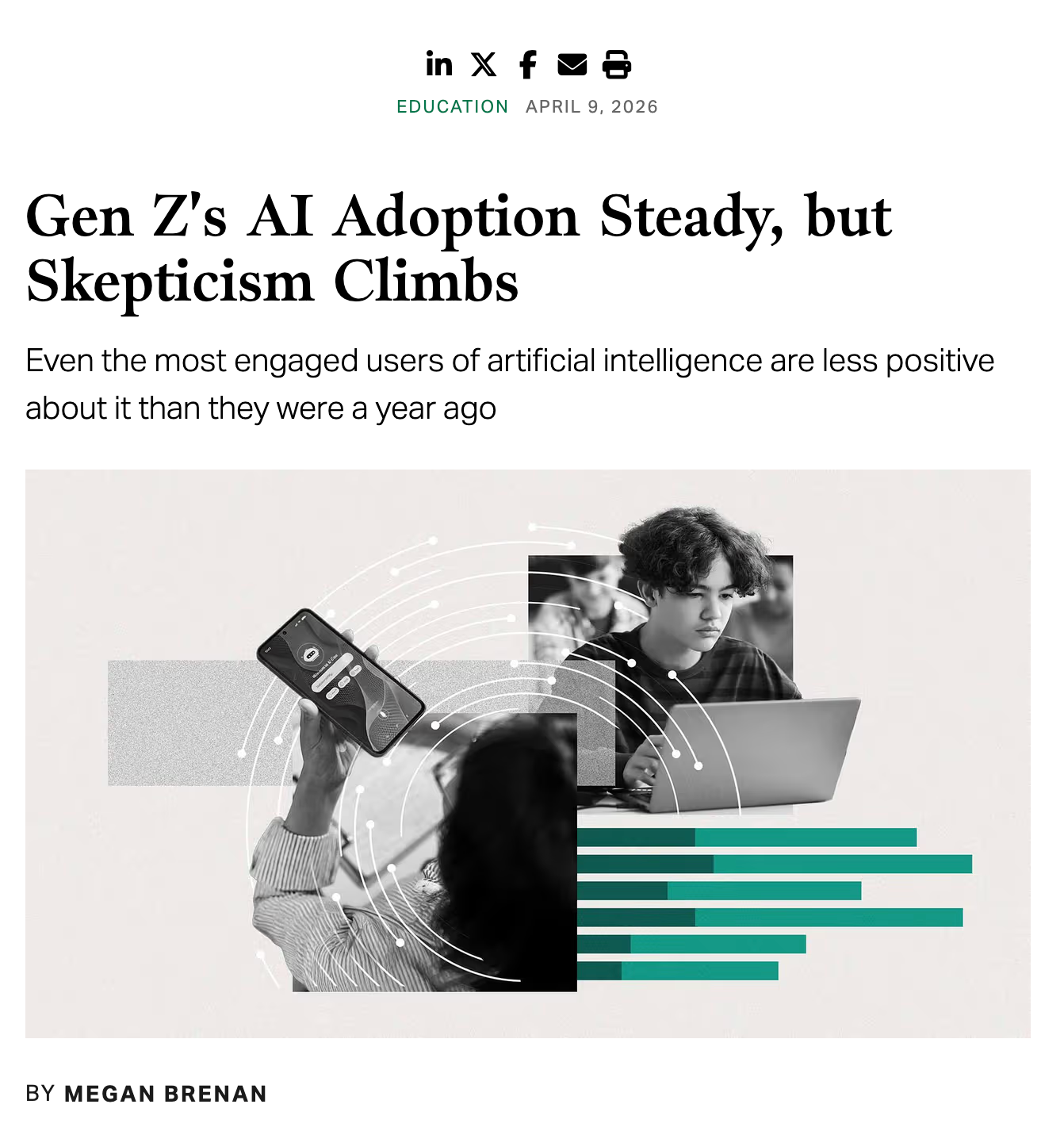
Nearly half of Gen Z believe AI will hurt their ability to think carefully. More than three-quarters believe it will make learning harder.
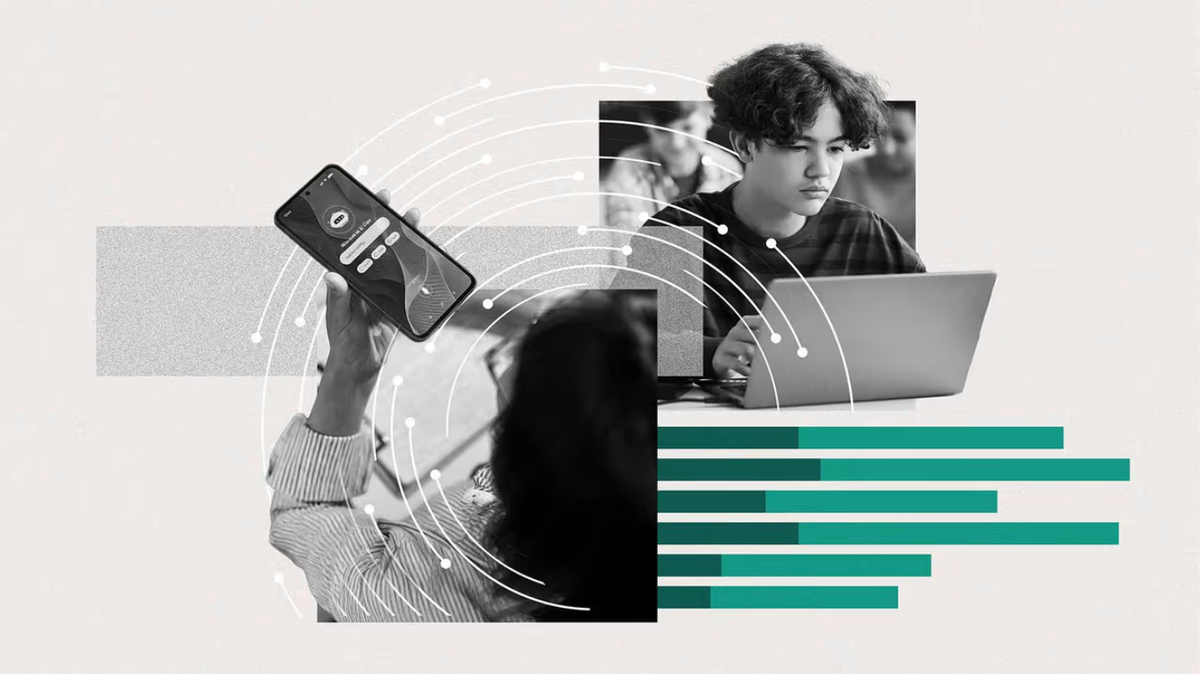
Source: Gallup | Walton Family Research
Study: Gen Z's AI Adoption Steady, but Skepticism Climbs (Part of the Voices of Gen Z Study)
Key Findings
- 51% of Gen Z use AI daily or weekly, essentially unchanged from 2025. Adoption has plateaued. The feelings about it have not
- Excitement about AI dropped 14 points to just 22%. Hopefulness fell 9 points to 18%. Anger rose 9 points to 31%. Anxiety holds steady at 42%
- Even daily AI users are losing enthusiasm, excitement among daily users dropped 18 points in a single year
- 8 in 10 Gen Zers believe AI will make it harder to learn in the future. 34% say it's "very likely," 46% say "somewhat likely"
- 42% believe AI will harm their ability to think carefully. Only 25% think it will help
- More Gen Z workers see risk than reward. 48% say AI risks outweigh its benefits in the workforce, up from 37% a year ago. Only 15% say the benefits outweigh the risks
- 69% of Gen Z workers trust human-only work. Only 28% trust AI-assisted work. 3% trust AI-only output
- School AI policies jumped sharply. 74% of K-12 students now say their school has AI rules, up from 51% in 2025
Risks & Advantages
Gen Z isn't rejecting AI, they're using it constantly. What's shifting is something more important:
they're starting to feel what the research already shows. Nearly half believe AI will hurt their ability to think carefully. More than three-quarters believe it will make learning harder. They're experiencing the Human Edge risk firsthand, the quiet erosion of the cognitive capabilities that make people irreplaceable, and their instincts are sound.
The danger isn't the anger or the anxiety. It's that most of them still don't have a framework to act on what they're sensing. Feeling uneasy is not the same as knowing what to protect.
The Competitive Advantage:
This data is actually good news if you know what to do with it. Gen Z's growing skepticism is a sign that human judgment is still intact. Here's how to build on it:
- Trust your instincts, then build on them. If AI feels like it's doing your thinking for you, it is. That discomfort is a signal worth listening to, not suppressing.
- Think first, prompt second. Before you ask AI anything, form your own answer. Even a rough one. That habit is what keeps your judgment sharp and your skills employable.
- Skepticism about AI-assisted work is professionally smart. 69% of Gen Z workers already trust human output more. That instinct aligns with what employers value most, people who can think independently, catch errors, and make calls AI can't.
- Learn how to use it anyway. The goal isn't avoidance, it's cognitive sovereignty. Knowing how AI works, where it fails, and when not to trust it is itself an irreplaceable skill.
The generation using AI the most is also the one most worried about what it's costing them. That tension is exactly the right place to start.